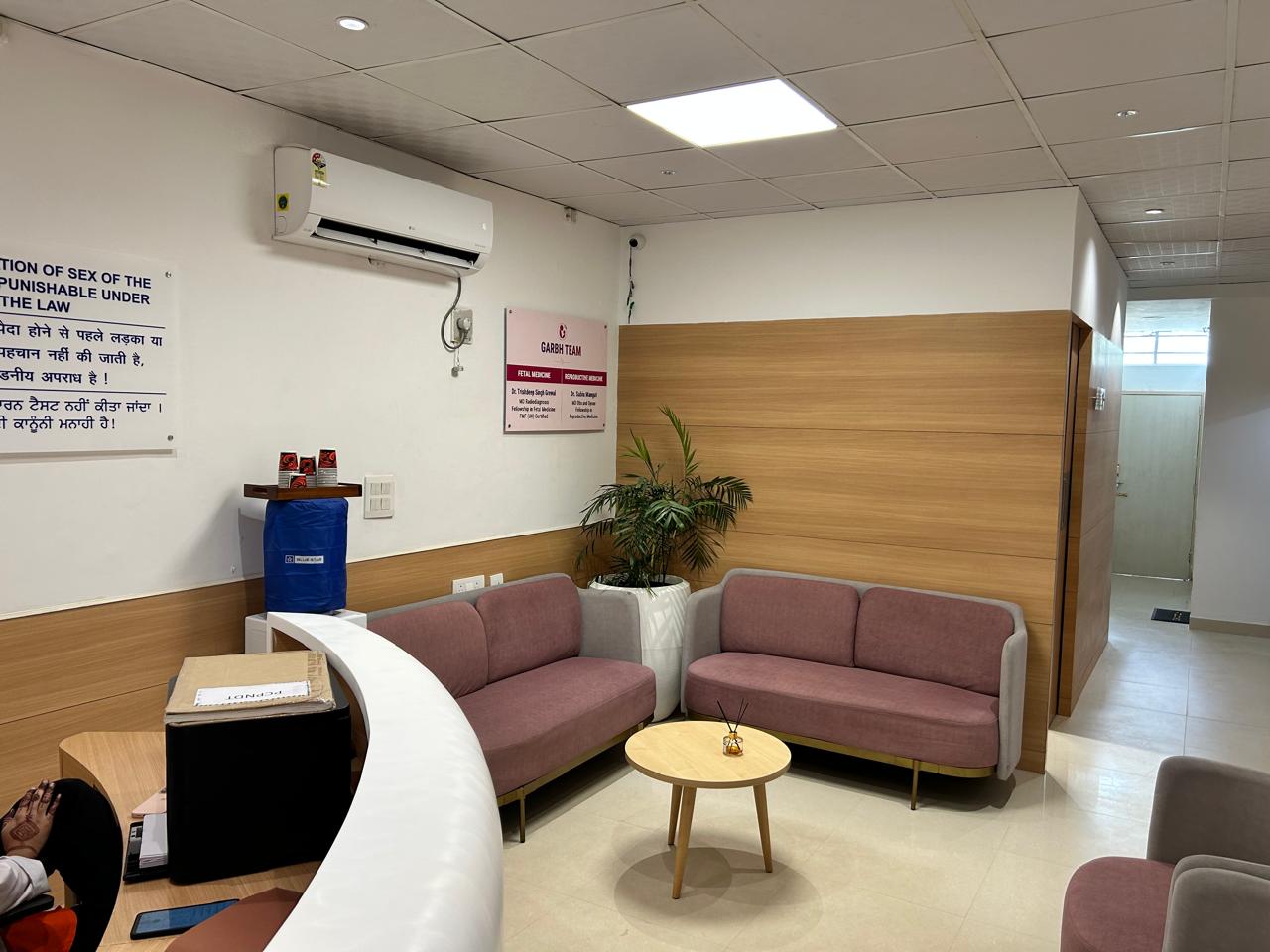
Amniocentesis Test in Chandigarh for Accurate Prenatal Diagnosis
Amniocentesis is a prenatal diagnostic test for detecting certain genetic and chromosomal conditions. At Garbh, it is performed with ultrasound guidance and expert fetal medicine care.
What Is an Amniocentesis Test?
An amniocentesis test involves collecting a small sample of amniotic fluid surrounding the baby. The sample contains fetal cells that can be examined for certain chromosomal and genetic conditions. Unlike screening tests that estimate the possibility of a condition, amniocentesis can provide diagnostic information. It may be recommended when previous screening, ultrasound findings, or family history indicates an increased risk.
When Is Amniocentesis Recommended and Performed?
Amniocentesis may be recommended when there is a higher risk of a genetic or chromosomal condition. It is generally performed between 15 and 20 weeks of pregnancy, depending on your medical needs.
It may be considered when:
- Prenatal screening shows an increased risk
- Ultrasound findings need further evaluation
- There is a family history of genetic conditions
- A previous pregnancy had genetic or structural abnormalities
- Testing for certain fetal infections is needed
Before the procedure, the specialist reviews your reports and explains the benefits, limitations, risks, and appropriate timing.

Why Choose Garbh for Amniocentesis Test in Chandigarh?
Garbh offers specialised fetal medicine care for families who need an amniocentesis test in Chandigarh. The team focuses on proper evaluation, ultrasound-guided procedures, and clear counselling to help you make informed decisions about prenatal testing.
- Experienced Fetal Medicine Specialists: Get expert guidance based on your pregnancy and medical history.
- Ultrasound-Guided Procedure: The procedure is performed with ultrasound guidance for accurate sample collection.
- Detailed Evaluation: Your screening results, ultrasound findings, and relevant medical history are reviewed before testing.
- Personalised Counselling: Understand the procedure, possible risks, benefits, and expected results clearly.
- Genetic Testing Guidance: Receive advice on the appropriate laboratory tests based on your individual requirements.
- Ongoing Support: Get professional guidance before and after the procedure for a more comfortable testing experience.
Is Amniocentesis Safe?
Amniocentesis is an invasive procedure, so it has some potential risks. Although serious complications are uncommon, it is important to understand these risks before making a decision.
Possible complications can include:
- Mild cramping or discomfort
- Fluid leakage
- Infection
- Pregnancy loss
The procedure should only be undertaken when medically appropriate and after discussing the potential benefits and risks with a qualified specialist. Garbh follows ultrasound-guided protocols and provides counselling before the procedure.